Whether you’re studying online, managing remote work, or just surfing the internet, your digital life is under constant threat. Practicing cyber hygiene is as important as brushing your teeth—it protects your personal data, identity, and devices from getting “infected.”
Let’s explore 10 practical steps to build daily cybersecurity habits for a safer digital world.
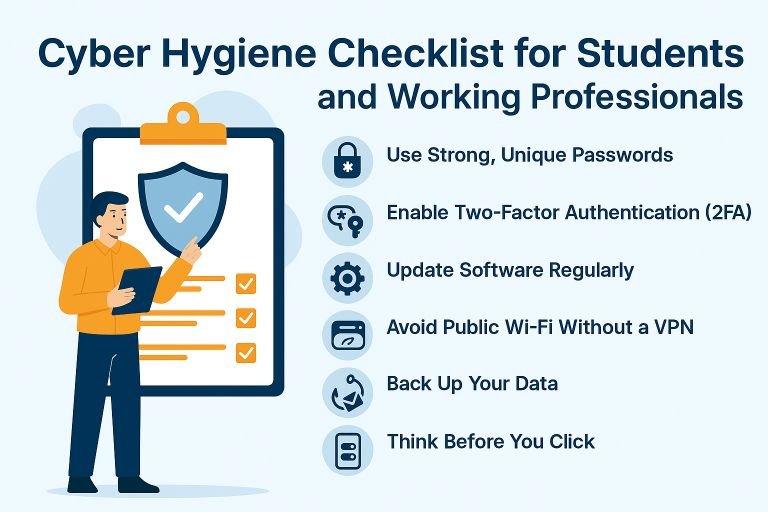
✅ 1. Use Strong, Unique Passwords
Don’t use the same password across websites
Avoid common words or patterns
Use passphrases or password generators
🔐 Pro Tip: Try a password manager like Bitwarden or 1Password
✅ 2. Enable Two-Factor Authentication (2FA)
Always turn on 2FA for emails, banking, and social apps
Use authentication apps (like Google Authenticator or Authy)
🔒 Adds a second layer of protection even if your password is leaked
✅ 3. Update Software Regularly
Keep your operating system, apps, and antivirus up to date
🔄 Patches fix security loopholes that hackers exploit
✅ 4. Avoid Public Wi-Fi Without a VPN
Don’t access banking or sensitive info on open networks
🌐 A VPN encrypts your data—even on insecure networks
✅ 5. Back Up Your Data
Use cloud + external drives for redundancy
💾 Protects against ransomware and accidental loss
✅ 6. Think Before You Click
Don’t click suspicious links in emails, messages, or popups
🎣 Most phishing attacks succeed because of human error
✅ 7. Check App Permissions
Review what access your apps are asking for
📱 Many free apps collect more data than necessary
✅ 8. Lock Your Devices
Use PINs, biometrics, or password protection
📱 Laptops and phones should auto-lock when idle
✅ 9. Monitor Your Accounts
Enable email alerts for sign-in attempts
🔍 Use websites like haveibeenpwned.com to check if your email was in a breach
✅ 10. Stay Informed
Follow cybersecurity news and trends
🧠 Awareness is your best shield—cyber threats are always evolving
🎯 Bonus Tips
Use secure browsers like Firefox or Brave
Log out of websites when done
Avoid using personal email for professional tasks
🧠 “Digital cleanliness is the foundation of digital safety.”