
Overview
The digital world is evolving—and so are the threats that target it. Our Threats & Attacks section provides a clear understanding of the various types of cybersecurity threats and the methods attackers use to compromise systems. Knowing what you’re up against is the first step toward securing your data, networks, and operations.
What is a Cyber Threat?
A cyber threat refers to any malicious act that seeks to damage data, steal information, or disrupt digital operations. These threats can come from a variety of sources, including criminal organizations, nation-states, insider threats, or careless end-users.
Learn more about cyber threats →
What is a Cyber Attack?
A cyber attack is a deliberate attempt to breach the information systems of an individual or organization. Attackers use various techniques to exploit vulnerabilities, steal sensitive data, or disrupt services.
Absolutely! Here’s an expanded, professional webpage content section for “Common Types of Cybersecurity Threats & Attacks” — tailored for a cybersecurity website, SEO-ready, structured for clarity, and enriched with relevant external links:
Common Types of Cybersecurity Threats & Attacks
Cyber threats are diverse and continuously evolving. Below is an in-depth overview of the most common types of cybersecurity threats and attacks affecting individuals, enterprises, and governments globally.
🔹 1. Malware (Malicious Software)
 Description:
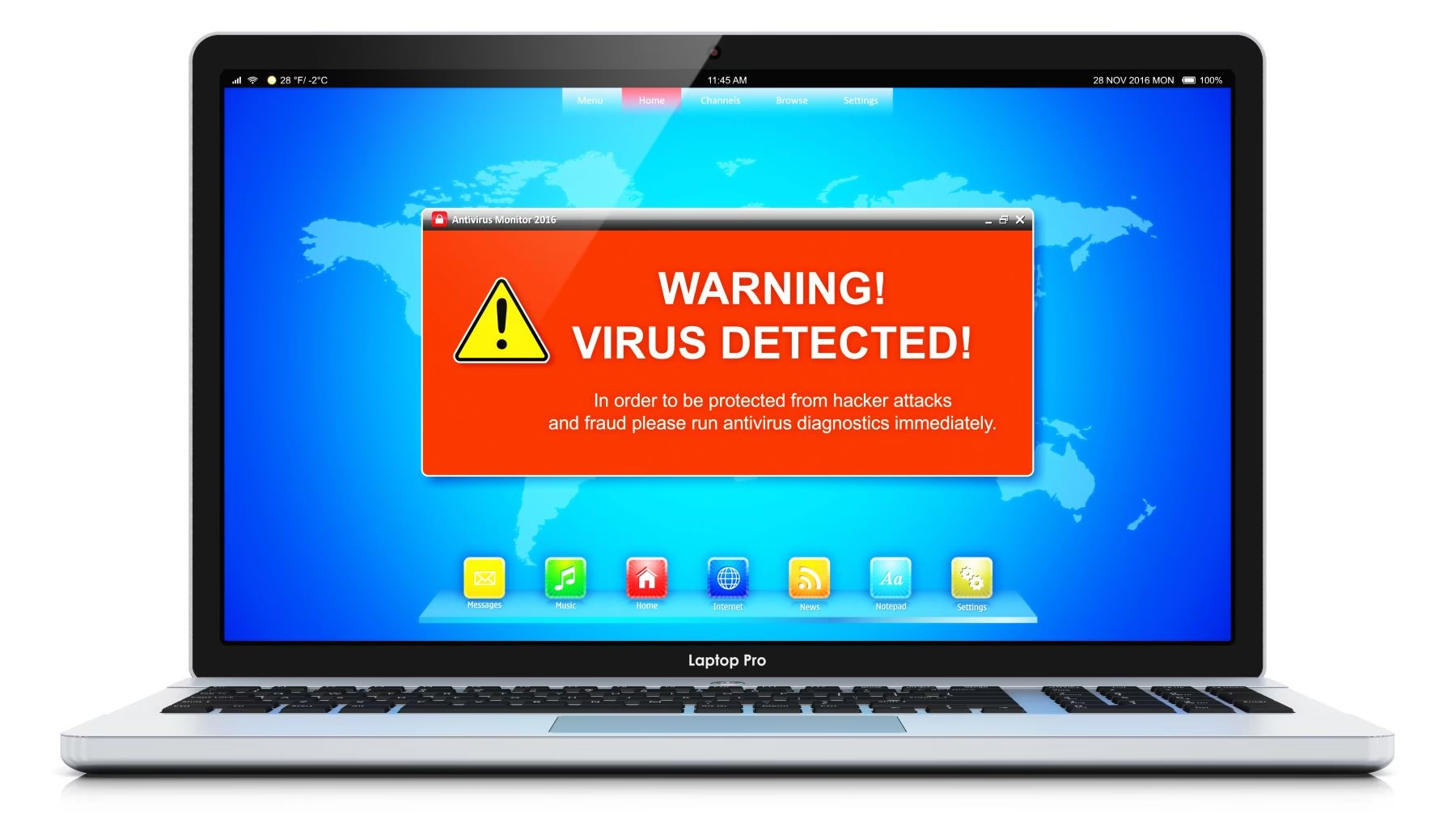
Malware is any software intentionally designed to cause damage to a computer, server, client, or network. It includes viruses, worms, trojans, spyware, adware, and rootkits.
Impact:
- Data theft or corruption
- System failure
- Unauthorized remote access
Real-world Example:
The WannaCry ransomware attack in 2017 infected over 230,000 computers worldwide.
🔹 2. Ransomware
 Description:
Ransomware encrypts a user’s data and demands payment (usually in cryptocurrency) to unlock it. It’s one of the most lucrative cybercrimes today.
Impact:
- Operational downtime
- Loss of sensitive data
- Financial losses and legal consequences
Real-world Example:
The Colonial Pipeline attack in 2021 led to fuel shortages across the U.S. East Coast.
🔹 3. Phishing
 Description:
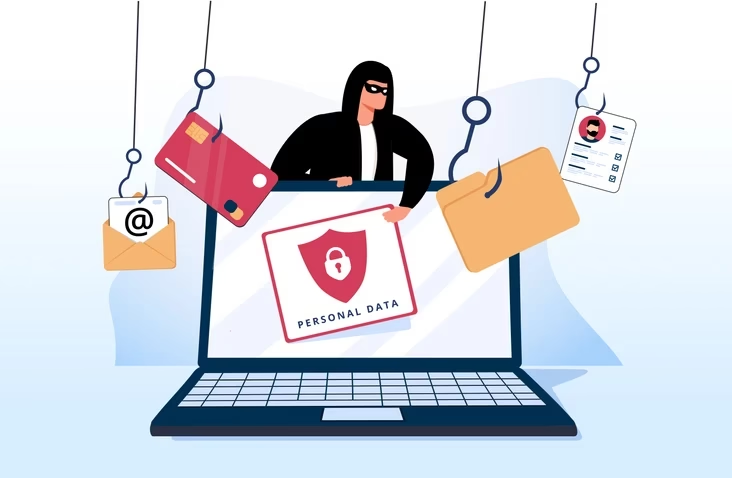
Phishing is a social engineering attack where attackers impersonate legitimate entities (via email, SMS, or fake websites) to trick users into revealing credentials or financial info.
Impact:
- Identity theft
- Account compromise
- Financial fraud
Types of Phishing:
- Spear Phishing: Targeted attacks on specific individuals
- Whaling: Attacks on executives or high-level officials
- Smishing & Vishing: SMS or voice-based phishing
🔗 Phishing Tactics Explained →
🔹 4. Denial-of-Service (DoS) & Distributed Denial-of-Service (DDoS)
Description:
DoS and DDoS attacks flood a server or network with traffic, causing service disruptions or total shutdowns. DDoS attacks involve multiple compromised systems, often forming a botnet.
Impact:
- Website or app downtime
- Loss of revenue and customer trust
- Increased infrastructure costs
🔹 5. Man-in-the-Middle (MitM) Attack
Description:
MitM attacks occur when a third party intercepts communication between two entities, often over unsecured Wi-Fi or compromised routers.
Impact:
- Data theft (logins, card details)
- Session hijacking
- Manipulated communications
🔹 6. SQL Injection
Description:
SQL Injection exploits vulnerabilities in web applications by inserting malicious SQL code into form fields or URLs to access backend databases.
Impact:
- Data leakage (personal, financial, or business-critical)
- Database corruption or deletion
- Unauthorized administrative access
🔗 OWASP Guide to SQL Injection →
🔹 7. Zero-Day Exploits
Description:
These are attacks that occur on the same day a vulnerability is discovered, before a patch or fix is available. Hackers exploit the gap between discovery and resolution.
Impact:
- Full system compromise
- Potential for widespread damage
- Difficult to detect and defend against
🔗 What is a Zero-Day? (Fortinet) →
🔹 8. Insider Threats
Description:
These threats come from within the organization—employees, contractors, or partners—who misuse access for personal gain or sabotage.
Impact:
- Data leaks
- Intellectual property theft
- Compliance and legal issues
🔹 9. Credential Stuffing
Description:
Attackers use stolen username-password combinations from previous breaches to access user accounts across platforms.
Impact:
- Unauthorized access to sensitive systems
- Account hijacking
- Reputational and financial loss
🔗 Credential Stuffing Defined →
🔹 10. Drive-by Download Attacks
Description:
These occur when a user unintentionally downloads malware by visiting a compromised website—often without clicking anything.
Impact:
- Stealth infection of devices
- Unauthorized control or surveillance
- Spread of malware within networks
🔗 Drive-by Downloads (Symantec) →
Emerging Threats in 2025
- AI-Driven Attacks: Threat actors now use artificial intelligence to automate and refine their attacks.
- Deepfakes & Synthetic Media: Used to manipulate communications and spread disinformation.
- IoT Exploits: Insecure smart devices are increasingly being targeted.
- Cloud Misconfigurations: Poor setup of cloud environments leads to data exposure.
Protective Measures
To defend against these threats, organizations and individuals must adopt proactive security practices:
- Use strong, unique passwords and password managers
- Enable multi-factor authentication (MFA)
- Install and update antivirus and firewall software
- Train employees on threat awareness and safe practices
- Back up data regularly and securely