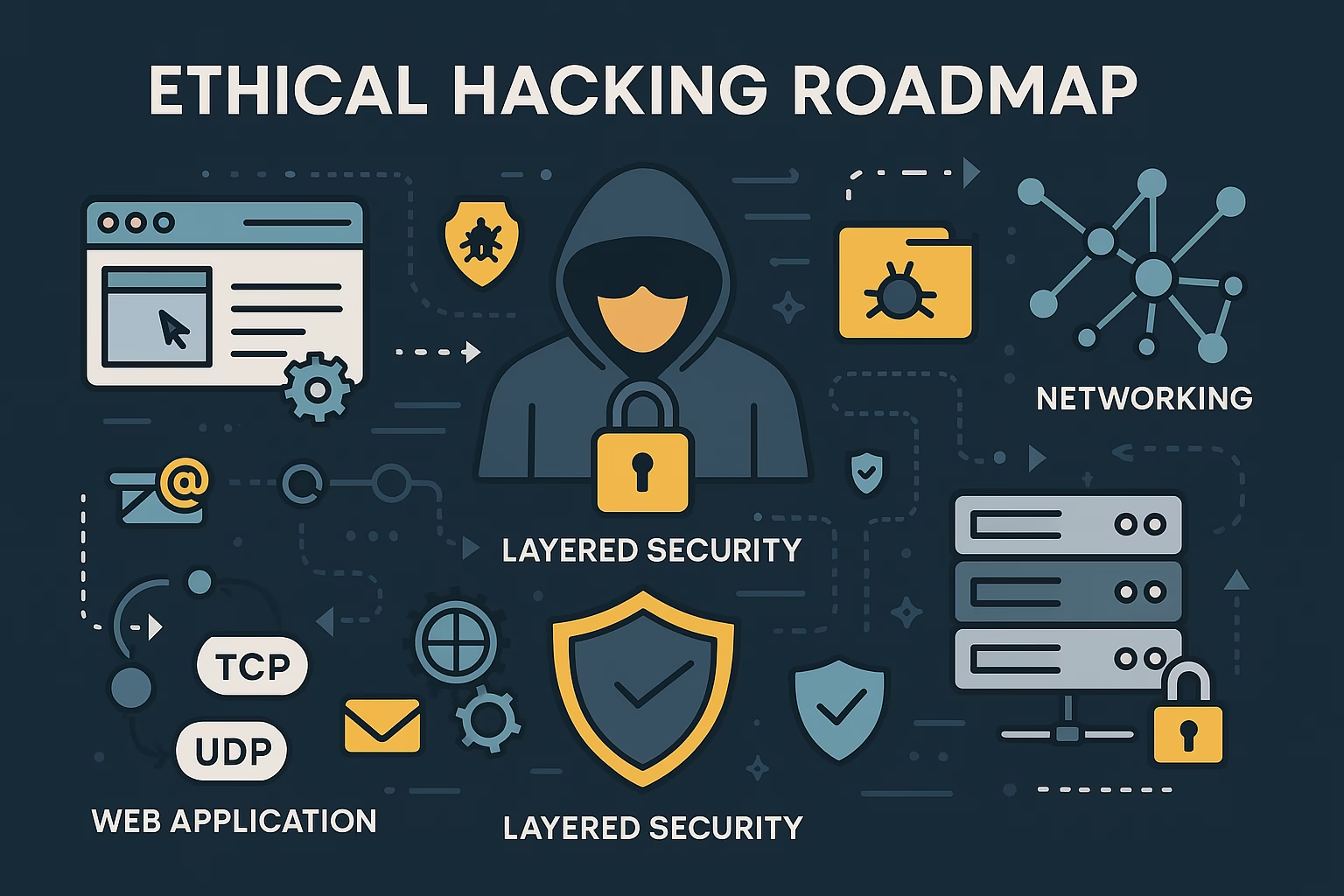
🧠 What Is Ethical Hacking?
Ethical hacking is the authorized practice of bypassing system security to identify potential data breaches and threats. Ethical hackers, also known as white-hat hackers, help organizations strengthen security by detecting vulnerabilities before malicious hackers can exploit them.
✅ Learn more about ethical hacking from EC-Council
🛠️ Phase 1: Web Application Basics
Understanding how web applications operate is foundational.
URL Structure & Parameters
Client-Server Model
HTTP Request & Response
Headers and Caching
Common Web Technologies (HTML, PHP, JS, SQL)
OWASP Top 10 Web Vulnerabilities
👉 OWASP Official Site
🖥️ Phase 2: Basics of Server
What is a Server?
Server Types: Web, Mail, DNS, Proxy
Password Storage (Hashing, Salting)
Working of Servers (Apache, NGINX)
🌐 Phase 3: Network Protocols & Fundamentals
A good hacker is also a good networker.
Key Protocols:
TCP, UDP, ICMP, ARP, RARP
FTP, SSH, HTTPS, SNMP
BGP, OSPF, EIGRP
Network Concepts:
Subnetting & CIDR
IP Addressing (IPv4, IPv6)
DHCP, DNS
OSI & TCP/IP Models
Layers, PDU, Headers, Services
3-Way Handshake
Network Troubleshooting
Proxies & TOR:
How proxies and The TOR Network work
VPN Tunneling, NAT, Port Forwarding
🖥️ Phase 4: Operating Systems (Windows, Linux, macOS)
Windows: Group Policies, PowerShell, Active Directory
Linux: File Systems, Permissions, Command Line
macOS: Admin & Security Tools
Understand OS-specific vulnerabilities and scripting capabilities.
☁️ Phase 5: Virtualization & Cloud
Virtual Machines (VMware, VirtualBox)
Cloud Platforms (AWS, Azure, GCP)
👉 Learn more at AWS Training
👨💻 Phase 6: Programming Languages
Knowing code helps in writing exploits and scripts.
Python
Syntax, Loops, Functions
Exception Handling, File I/O
Basics of Socket Programming
Bash & PowerShell
Linux and Windows automation
🌐 Phase 7: Web Application Development
Understand what you are hacking.
HTML, CSS, JavaScript
Server-Side Scripting (PHP, Node.js)
RESTful API Basics
🛡️ Phase 8: Web Application Security
Common Attacks: SQLi, XSS, CSRF
Security Headers: CSP, X-Frame-Options
Same-Origin Policy
Tools: Burp Suite, OWASP ZAP
📶 Phase 9: Wireless Security
Encryption Standards: WEP, WPA, WPA2
Wireless Attacks: Deauthentication, Evil Twin
Wireless Intrusion Detection Systems (WIDS)
🔐 Phase 10: Network Security
Firewalls: Stateful, Stateless
IDS/IPS: Working and Implementation
VPNs: Protocols (L2TP, IPSec), Encryption, Use Cases
🔒 Phase 11: Cryptography
Encryption Algorithms: AES, RSA
Hashing: SHA, MD5
PKI & Digital Signatures
Symmetric vs Asymmetric
Block vs Stream Ciphers
📘 External Resource: Introduction to Cryptography – NIST
🎯 Final Thoughts
This roadmap is designed for anyone passionate about cybersecurity. Whether you’re a student, IT professional, or an aspiring penetration tester, mastering these modules will pave your way to becoming a proficient ethical hacker.