India’s Digital Forensics Market Set to Skyrocket to ₹11,829 Crore by 2030
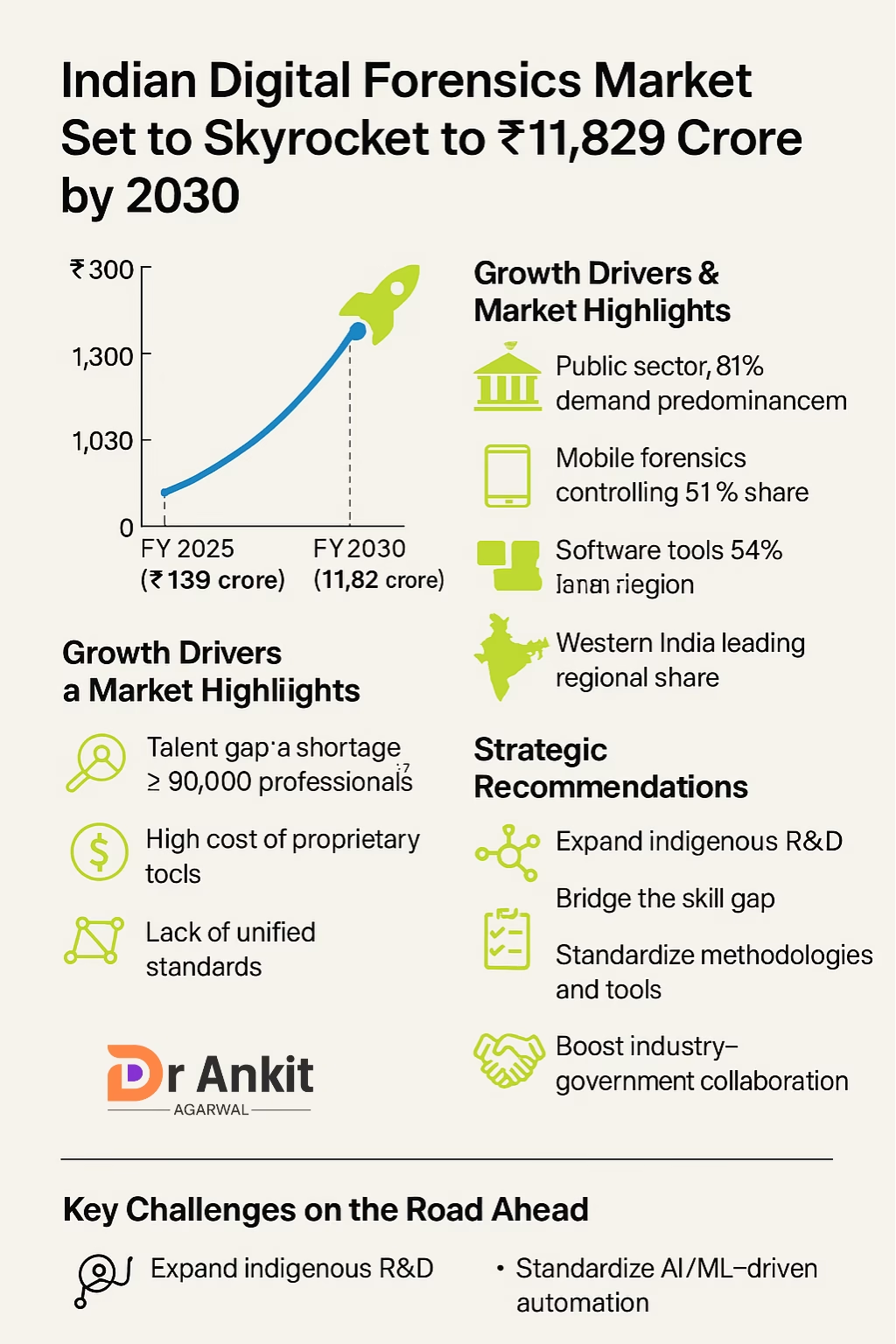
India’s digital forensics market is on a high‑growth trajectory, projected to reach US $1.39 billion (₹11,829 crore) by fiscal year 2029–30, expanding at an impressive ~40% CAGR—well above the global rate of ~11% (Business Standard).
Growth Drivers & Market Highlights
- $266 million (FY 2025) market size for India vs. $6.5 billion globally (Business Standard)
- With 81% of demand coming from public sector agencies, especially law enforcement, government remains the dominant buyer (The Finance Story)
- Mobile forensics commands a 51% market share, fueled by smartphone proliferation and the surge in digital payments and mobile-centric cybercrime (Deloitte)
- Software tools comprise 54% of the market, followed by services and managed forensic services (~27%) (Deloitte)
Regional & Segment Trends
- Western India leads with 32% market share, followed by South at 30%, North at 28%, and Eastern region at ~10% (Deloitte, The Finance Story)
- Other rising segments include cloud forensics, IoT forensics, and e-discovery and legal tech, now representing ~13% (The Finance Story)
Key Challenges on the Road Ahead
Despite the surge in demand, the sector faces formidable headwinds:
- Talent gap: India is projected to have a shortage of ~90,000 trained professionals in digital forensics (Deloitte)
- High cost of proprietary tools: Limited presence of Indian vendors makes solutions costly and dependent on imports (The Finance Story)
- Lack of unified standards: Varying methodologies and tools across agencies reduce reliability and judicial admissibility of digital evidence (Business Standard)
Strategic Recommendations from Deloitte‑DSCI
To unlock India’s full potential, the report outlines a roadmap:
- Expand indigenous R&D to reduce reliance on imports and build Atmanirbhar forensic tech (Deloitte)
- Bridge the skill gap via industry-academia partnerships, new training centres, certification programmes, and Centres of Excellence (Deloitte)
- Standardise tools and protocols across law enforcement agencies for consistency and legal robustness (Business Standard, Deloitte)
- Increase industry–government collaboration and streamline procurement of outsourced forensic services (Business Standard, Deloitte)
- Leverage AI/ML‑driven automation in forensic analysis to boost speed and accuracy (Deloitte)
What Experts Say
Nikhil Bedi of Deloitte India calls digital forensics a strategic capability:
“Digital forensics has moved from a reactive tool to a strategic capability… essential for safeguarding digital trust, securing critical infrastructure and supporting compliance.” (Deloitte)
Vinayak Godse (DSCI) emphasises India’s potential:
“The potential to shape a globally competitive forensic industry is within reach… but we need investment in talent, R&D, and partnerships.” (Deloitte)
External Resources (Highly Recommended)
- Read the full Deloitte–DSCI 2025 report here: “Indian Digital Forensic Market Report 2025”
- Explore Deloitte’s press release summarising key findings and strategic callouts (Deloitte)
- Broader context on India’s compliance environment:
- Reserve Bank of India regulations
- CERT-In cybersecurity mandates
- Digital Personal Data Protection (DPDP) Act
Future Outlook
With India projected to command 10% of the global digital forensics market by 2030 (up from ~3% today) (Business Standard, Deloitte), the country has a singular opportunity to become a leader in cyber resilience. However, success hinges on bridging talent gaps, fostering homegrown innovation, and embedding forensic readiness within institutions.
India’s future as a global cybersecurity hub is within reach—if it bets big on talent, infrastructure, and indigenous innovation.