
As cyberattacks become more advanced and stealthy, traditional security measures like antivirus software and firewalls are no longer enough. Organizations now need to go on the offensive with a technique known as Threat Hunting.
🔍 What is Threat Hunting?
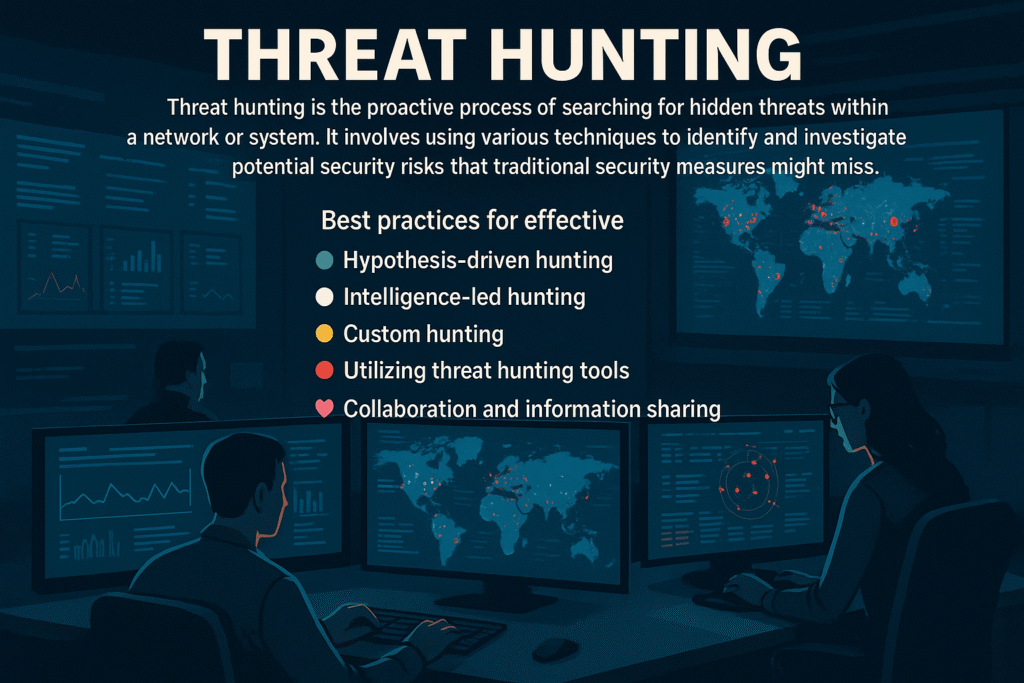
Threat hunting is the proactive process of searching for hidden threats within a network or system. It involves using various techniques to identify and investigate potential security risks that traditional tools might miss—such as insider threats, stealth malware, and zero-day exploits.
Unlike reactive approaches that wait for alerts, threat hunting aims to uncover threats before they cause harm.
⚙️ How Threat Hunting Works
The threat hunting process generally involves:
- Generating hypotheses about potential attacks
- Collecting and analyzing data from endpoints, logs, and SIEM tools
- Searching for indicators of compromise (IOCs)
- Investigating suspicious activities
- Remediating identified threats
- Learning and improving from each hunt
✅ Best Practices for Effective Threat Hunting
To make your threat hunting efforts more impactful, follow these industry-proven strategies:
🟢 Hypothesis-Driven Hunting
Build threat hypotheses based on behavior or threat intel. For example, “A threat actor might be using remote PowerShell access to exfiltrate data.” Learn more from MITRE ATT&CK on common attack patterns.
⚪ Intelligence-Led Hunting
Use threat intelligence feeds and known indicators of compromise (IOCs) to detect and prioritize real threats. This method aligns threat hunting with global campaigns.
🟡 Custom Hunting
Craft custom queries and search patterns tailored to your systems. Custom threat hunting can detect anomalies specific to your environment, enhancing accuracy.
🔴 Utilizing Threat Hunting Tools
Leverage modern tools like:
These platforms help automate tasks, analyze data, and speed up detection.
💞 Collaboration and Information Sharing
Work closely with internal SOC teams and external partners. Use frameworks like ISACs or CISA to share threat intelligence and improve defense at scale.
🧠 Who Performs Threat Hunting?
Threat hunting is typically carried out by cybersecurity analysts or SOC teams with expertise in:
- System logs and network traffic
- Malware analysis
- Threat intelligence
- Behavioral analytics
- Scripting (Python, PowerShell, etc.)
You can explore common job roles on platforms like CyberSeek to understand more about threat hunting careers.
🔐 Benefits of Threat Hunting
- Reduced detection and response time
- Minimized business impact from breaches
- Improved cyber resilience
- Enhanced use of existing security investments
- A stronger security culture across the organization
📈 Conclusion: Stay One Step Ahead
Cybercriminals are constantly evolving, and so must your defense. Threat hunting transforms your security team from reactive defenders to proactive hunters.
By embracing proactive strategies, leveraging tools, and collaborating within the cybersecurity ecosystem, organizations can gain a vital edge in the battle against cyber threats. across multiple monitors.